27 Oct, 2026
By : Admin
Wholesale Kurtas From India; How To Plan Your Retail Collection
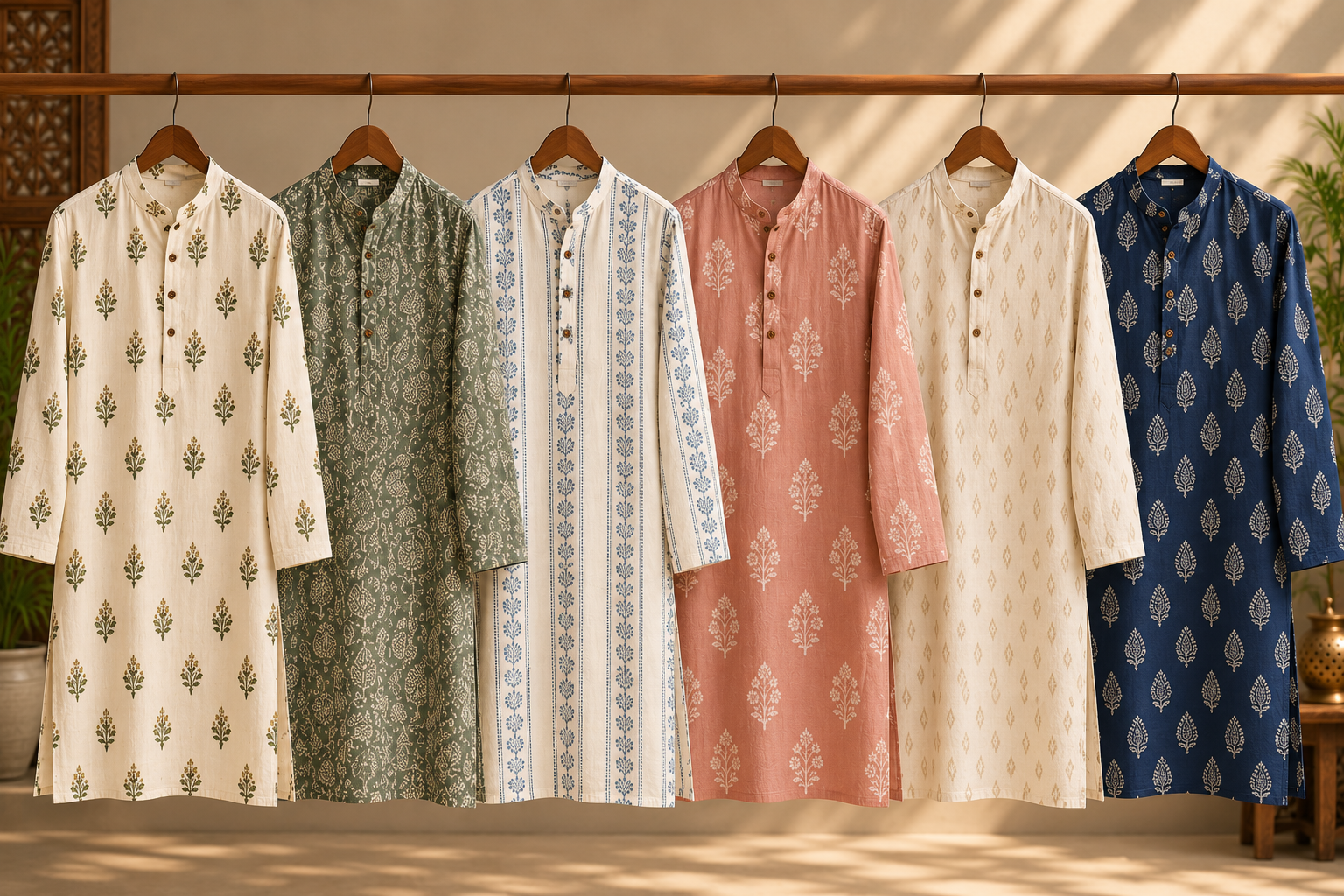
Buying wholesale kurtas from India involves choosing a collection that your customers will want to wear. Design attracts attention, but fit, fabric, colour and the right size assortment help determine whether the stock works commercially. A clear collection brief connects these retail considerations to the sourcing discussion.
For boutiques, ethnicwear retailers and clothing wholesalers, the starting point is the intended customer. Decide which occasions the collection will serve, when it should be available and how much stock you want to commit to the opening range.
Give the collection a clear direction
Identify whether you need men's or women's kurtas, or another specifically defined range. Describe the style, fabric preference, sleeve length and level of decoration you have in mind. Reference photographs can communicate the visual direction, especially when a written description is difficult.
Explain which features are essential and which can be adapted. For example, the silhouette and fabric may be fixed while colour options remain open. A focused brief helps keep the conversation relevant to your store instead of creating a very broad catalogue search with little guidance on what to select.
Discuss measurements as well as sizes
Size names alone do not provide enough information for a retail order. Small, medium and large may differ between ranges. Review the proposed measurement chart and clarify whether it describes the body or the finished garment. Relevant measurements can include chest, shoulder, sleeve and garment length.
Where a sample is arranged, review the fit with your intended customer in mind. Also consider fabric feel, comfort and the proposed care guidance. A garment that photographs well may need a different length or cut for your market. Discuss these points before finalising the size selection for the commercial order.
Build the assortment around likely demand
Specify quantity by style, colour and size rather than providing only a total piece count. Your own customer knowledge should guide the assortment. A small opening range with useful depth in the main sizes may be easier to manage than many designs with only a few pieces each.
For illustration, an order of 120 pieces needs an allocation across the chosen styles and sizes. This is a planning example, not a stated minimum order. Discuss the minimums applicable to the proposed range and any effect that colour or design choices have on the overall quantity.
Review everyday quality details
Consider stitching, seams, closures and the attachment of decorative elements. Discuss the fabric composition and finish expected for the range. These details help you judge whether the product suits the intended price point and support a clear description for your customers.
Colour selection also deserves attention. Screen images are useful for shortlisting but can differ from the physical garment. Where colour matching is important, discuss an appropriate reference. Record the version approved and any changes requested so that everyone involved in the purchase is working from the same understanding.
Think about presentation and retail timing
Discuss individual packing, garment labels and carton organisation. Packing by style and size can make receiving and stock allocation easier. Own-brand labels or packaging should be included in the brief early, since they may involve separate artwork and quantity considerations.
Work backwards from the date you need the range ready for sale. A festival or seasonal collection needs time for review, order confirmation, preparation, transit and receiving. Label requirements depend on the destination market; obtain local guidance on the information needed before finalising branded labels. A dispatch estimate should not be treated as the date stock will be on your shelves.
Prepare a useful collection enquiry
Include reference images, fabric preferences, garment measurements, the proposed size and colour mix, destination and target buying window. If you are still refining the range, identify the choices on which you would welcome discussion.
Alexander Pinto Export Import lists kurtas within its textiles and apparel category. Share your retail collection brief through the contact page to begin a conversation about the specifications, assortment and commercial details for your proposed order.